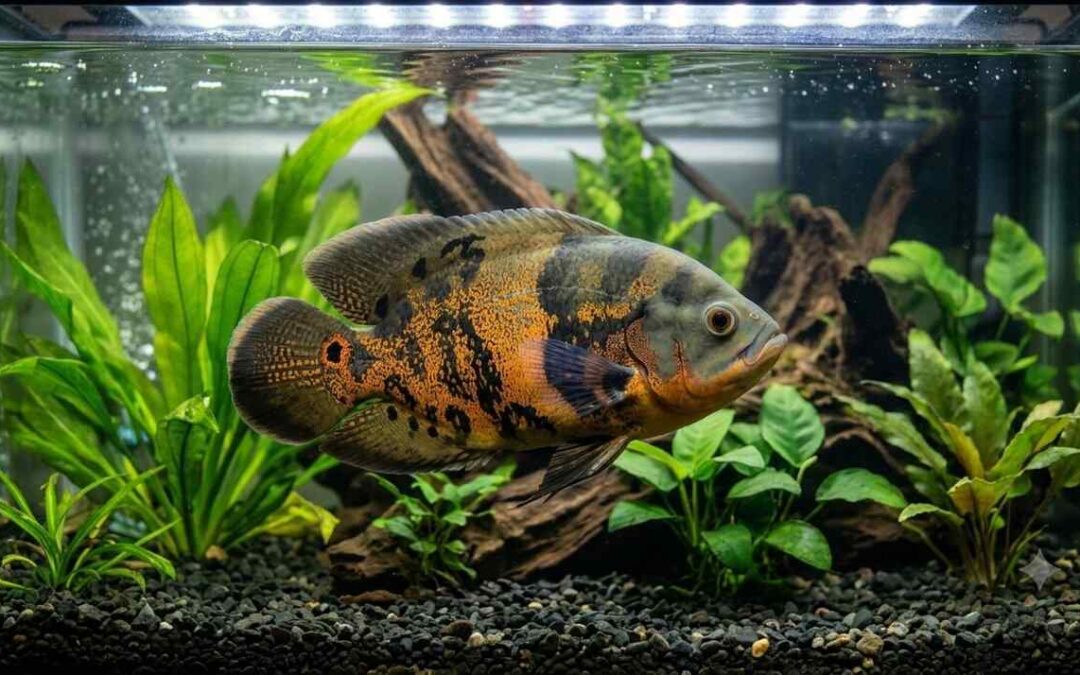
If you notice hundreds or even thousands of tiny eggs on a flat rock in your aquarium, your Oscar fish may have just spawned. Many fish keepers, especially first-time Oscar breeders, often wonder what these eggs look like.
Oscar fish eggs are small, round, and sticky, usually appearing in neat rows on a clean, flat surface. Their color changes over the next few days depending on whether they are fertilized. Healthy eggs are often light tan, amber, or slightly see-through, while unfertilized eggs usually turn bright white and may develop a fuzzy layer of fungus.
Oscar fish usually lay lots of tiny, sticky eggs all at once, sometimes as many as 1,000 to 2,000, on flat surfaces they’ve cleaned, like rocks or the glass of your tank. Healthy eggs develop embryos and hatch after just a few days.
Now that you know the basics, let’s look more closely at each stage of Oscar fish eggs and how you can tell if your breeding pair has been successful.
Oscar Fish Eggs at a Glance
Freshly laid Oscar eggs have several distinctive characteristics:
- Tiny and perfectly round
- About 1 to 2 millimeters in diameter
- Sticky or adhesive
- Laid in organized rows or clusters
- Usually light tan, beige, amber, or slightly transparent
- Deposited on smooth, flat surfaces
Unlike livebearers such as guppies or mollies, Oscar fish reproduce by laying eggs outside their bodies. The parents prepare a spawning site before the female deposits the eggs, and the male follows behind to fertilize them. Because the eggs are adhesive, they remain firmly attached until they hatch.
Where Do Oscar Fish Lay Their Eggs?
Where you find the eggs is one of the easiest ways to identify Oscar eggs.
Before spawning, Oscar pairs spend hours or even days cleaning a flat surface. You might see them biting or rubbing a rock, piece of slate, driftwood, flower pot, or even the aquarium glass over and over.
Common spawning sites include:
- Flat rocks
- Slate tiles
- Ceramic plates
- Large smooth decorations
- Aquarium glass
- PVC spawning tiles
After cleaning the area, the female lays long rows of eggs while the male swims behind to fertilize them.
The eggs often look like thousands of tiny beads have been carefully glued to the surface.
What Color Are Healthy Oscar Fish Eggs?
Healthy Oscar eggs usually have a warm, natural color rather than bright white.
Typical colors include:
- Light brown
- Tan
- Amber
- Beige
- Slightly translucent
The particular shade can vary depending on the individual fish, lighting, and genetics.
Many first-time breeders worry when the eggs are not crystal clear, but this is completely normal. Healthy eggs often look creamy tan on the first day and gradually become more transparent as they develop.
As the eggs develop, they slowly become more transparent.
What Do Fertilized Oscar Fish Eggs Look Like?
Fertilized eggs change noticeably within just a few days, moving from fresh eggs to visible embryo development.
Day 1
Fresh eggs appear:
- Smooth
- Round
- Slightly transparent
- Tan or amber-colored
Everything may look uniform across the spawning site.
Day 2
Within 24 to 48 hours, healthy embryos begin developing.
You may notice:
- Tiny dark dots
- Slightly darker centers
- More transparency
- Small eye spots are beginning to form
These tiny dots are actually developing fish embryos.
Day 3
By 48 to 72 hours, healthy eggs become easier to read as the embryos develop further.
You may see:
- Tiny eyes
- Small tails curled inside
- Gentle movement within the egg
- Embryos wriggling
Seeing these changes is a clear sign that fertilization was successful.
What Do Unfertilized Oscar Eggs Look Like?
Not every egg gets fertilized.
Unfertilized Oscar eggs are usually easy to recognize because they change color much faster than healthy ones.
Typical signs include:
- Bright white color
- Murky appearance
- No visible embryo
- No eye spots
- No movement
Within another day or two, unfertilized eggs often begin to show fungus.
Instead of remaining smooth, they become covered in white cotton-like fuzz.
Healthy eggs nearby can still survive, but fungus may spread if not removed.
Why Do Oscar Fish Eggs Turn White?
White eggs are among the most common concerns for Oscar breeders.
Several reasons can explain why this happens.
The eggs weren’t fertilized
This is the most common reason.
Young or inexperienced breeding pairs sometimes fail to fertilize every egg.
Fungus developed
Dead eggs quickly become a breeding ground for fungus.
The fungus gives the eggs a fuzzy white appearance.
Poor water quality
High ammonia or nitrite levels, or dirty water, can damage eggs before they develop properly.
Stress
If the breeding pair becomes frightened or constantly disturbed, fertilization rates may decrease.
How Many Eggs Do Oscar Fish Lay?
Oscar fish are surprisingly prolific breeders.
A healthy female can lay anywhere from:
- 1,000 eggs
- 1,500 eggs
- 2,000 eggs
- Occasionally even more
The exact number depends on:
- Age
- Size
- Health
- Diet
- Breeding experience
Larger, mature females usually lay more eggs than younger fish.
How Long Do Oscar Fish Eggs Take to Hatch?
Oscar eggs grow fairly quickly under ideal conditions.
Typical timeline:
| Day 1 | Eggs laid and fertilized |
| Day 2 | Embryos begin forming |
| Day 3 | Eyes and tails become visible |
| Day 3–4 | Eggs hatch into wrigglers |
| Day 5–7 | Fry absorb yolk sacs |
| Day 7–10 | Fry begin free swimming |
Warmer water within the recommended breeding range can slightly speed up egg development.
Do Oscar Fish Guard Their Eggs?
Yes, they’re actually excellent parents.
Oscar fish are recognized for their strong parental instincts.
Both parents typically:
- Fan the eggs with their fins
- Remove dead eggs
- Chase away tank mates
- Clean the spawning site
- Protect newly hatched fry
Watching Oscar parents care for their eggs is one of the most rewarding parts of breeding these intelligent cichlids. Sometimes, inexperienced pairs eat their eggs after spawning. This is common during the first few breeding attempts and usually gets better as the fish gain experience.
Water Conditions for Healthy Oscar Eggs
Good water quality is one of the biggest factors affecting egg survival.
Ideal breeding conditions include:
- Temperature: 78–82°F (26–28°C)
- pH: 6.5–7.5
- Ammonia: 0 ppm
- Nitrite: 0 ppm
- Low nitrate levels
- Strong filtration without excessive current
Keeping water conditions stable helps improve fertilization rates and reduce the risk of fungus.
How to Tell if Oscar Eggs Are Alive
Healthy Oscar eggs change every day.
Signs your eggs are alive include:
- Tan or amber color
- Slight transparency
- Dark developing centers
- Tiny eyes becoming visible
- Small tails inside
- Gentle movement before hatching
If most eggs remain white after two days and show no signs of development, they were probably not fertilized and will not develop further.
What Happens After the Eggs Hatch?
Newly hatched Oscars don’t immediately swim around.
Instead, they become what fish keepers call “wrigglers.”
At this stage, they:
- Remain attached to the spawning site
- Wiggle constantly
- Feed from their yolk sacs
- Require no external food
After several more days, the fry become free-swimming and ready for food.
Once swimming freely, they can be fed:
- Newly hatched baby brine shrimp
- Microworms
- Finely crushed fry food
- Commercial cichlid fry diets
Feeding the fry often and keeping the water clean are both important for healthy growth.
Common Mistakes When Identifying Oscar Eggs
New breeders sometimes mistake other objects for Oscar eggs or misjudge their condition.
Here are a few common misconceptions:
- Healthy eggs are not always perfectly clear. Many start out tan or amber, and this is completely normal.
- A few white eggs do not mean the whole spawn has failed. It is common for some eggs to remain unfertilized while others develop normally.
- Avoid removing eggs too early. Embryos are much easier to see after 24 to 72 hours, so give them time before deciding they are not viable.
- Try not to handle the eggs too much. Touching or moving them can harm the embryos or stress the parents.
Being patient during the first few days after spawning is very important.
Final Thoughts
Oscar fish eggs are small, round, and sticky, and are usually laid in large batches on clean, flat surfaces. Fresh eggs are usually tan, amber, or slightly see-through, while unfertilized eggs quickly turn white and often develop fungus. Over the next two to three days, fertilized eggs become more transparent, showing tiny eyes, curled tails, and gentle movement before hatching into wrigglers.
If your Oscar pair has recently spawned, try not to interfere too much. Keep the water clean, reduce stress, and let nature do its work. With the right care, you will soon see tiny fry begin their journey.
FAQs
How can I tell if Oscar fish eggs are fertilized?
If your Oscar fish eggs are fertilized, they’ll stay tan, amber, or a little see-through. After a day or two, you might spot tiny dark eyes, little tails forming, and sometimes movement inside. Unfertilized eggs usually turn bright white and can develop a fuzzy, moldy appearance.
Why did all my Oscar fish eggs turn white?
If all the eggs turned white, they were most likely not fertilized. In that case, young or inexperienced breeding pairs may be the reason, though poor water quality or stress may also contribute.
How many eggs do Oscar fish lay at one time?
A healthy female Oscar commonly lays between 1,000 and 2,000 eggs during a single spawning event.
How long does it take Oscar fish eggs to hatch?
Under ideal water conditions, Oscar fish eggs generally hatch in 3 to 4 days.
Should I remove white Oscar fish eggs?
If the fungus begins to spread, removing obviously dead white eggs can help protect healthy ones. However, if the parents are caring for the spawn, they often naturally remove dead eggs.
Do Oscar fish eat their own eggs?
Yes, especially first-time breeding pairs. Stress, frequent disturbances, poor water quality, or inexperience can cause Oscars to eat their eggs. Mature, experienced pairs are usually much better at protecting and raising their offspring.