Guppies are a preferred choice for beginners because they are colorful, active, and fairly easy to care for when their basic needs are met. However, just because they are hardy doesn’t mean they can live well in any bowl or tank.
So, what do guppies need to survive? They need a tank that’s the right size with a filter, clean and stable water, the right temperature, healthy food, a safe environment, friendly tankmates, and regular care. Meeting these needs can make a big difference in how healthy and lively your guppies are.
If you are setting up a guppy tank for the first time, try to think of it as constructing a small, stable ecosystem instead of just filling a container with water. Here’s what guppies need to live well.
What Do Guppies Need to Survive?
In simple terms, guppies need seven main things:
- A properly sized aquarium
- Clean, dechlorinated water
- Stable water temperature and parameters
- Gentle filtration and good oxygenation
- A balanced omnivorous diet
- Plants, hiding spots, and a safe environment
- Compatible social company and regular maintenance
A 10-gallon aquarium or larger is generally a better choice for sustaining a stable environment for a small group. Guppies also do best in warm freshwater, with temperatures around 72°F to 82°F, a pH around 7.0 to 8.0, and ammonia and nitrite maintained at 0 ppm.
The good news is you don’t need a fancy setup to give your guppies what they need. It’s more important to know why each part matters for your fish.
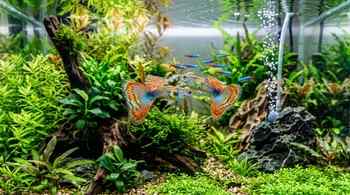
1. A Properly Sized Aquarium
Guppies first need enough space to swim, explore, and feel comfortable.
A 5-gallon aquarium can work for a couple of guppies in an appropriate setup, but 10 gallons or larger is a better starting point for a healthy group. More water volume also provides more stability in temperature and water chemistry.
Guppies like to swim a lot, so a small or crowded tank is not good for them. Too many fish in one tank also means more waste, which makes it harder to keep the water clean.
When picking a tank, think about more than just how many fish can fit. Consider how much space they’ll need as they grow and how much waste the tank can handle safely.
Also, make sure your tank has a secure lid. Guppies can jump out, especially if they get scared or stressed, so an open tank can lead to escapes.
2. Clean, Dechlorinated Water
If there’s one thing you shouldn’t ignore when caring for guppies, it’s water quality.
Fish spend all their time in the water, so bad water conditions can harm them all the time, even if the tank looks clean.
Always treat tap water with a water conditioner before adding it to the tank. Chlorine and chloramines in tap water are safe for people but can hurt fish.
You should also monitor the aquarium’s nitrogen cycle. Ideally:
- Ammonia: 0 ppm
- Nitrite: 0 ppm
- Nitrate: Keep low, preferably below about 20 ppm
Ammonia and nitrite are especially important because high levels can poison your fish. Doing regular partial water changes, using a good filter, and not overfeeding or overcrowding the tank can help keep these levels safe.
Don’t change all the water in the tank unless there’s an emergency. Regular partial water changes are usually better for keeping the water clean and the tank stable.
3. Stable Temperature and Water Parameters
Guppies are tropical freshwater fish, so temperature matters.
A temperature between 72°F and 82°F works well for guppies. It’s more important to keep the temperature steady than to aim for one exact number. For more details, see our guide to the ideal water temperature for guppy fish.
Sudden changes in temperature can stress your fish, especially if the water quality is already poor or there are other problems in the tank.
Use a good aquarium thermometer to check the temperature. If your room is cool, you might need a heater to keep the water steady.
Guppies usually like slightly hard, alkaline water with a pH between 7.0 and 8.0. Your tap water might already be in this range, so test it before making any changes.
Don’t keep adjusting the pH to hit a specific number. It’s usually better to keep the pH stable than to aim for perfection.
4. Gentle Filtration and Good Oxygenation
A filter does more than just make the water look clear.
A good aquarium filter removes debris, supports beneficial bacteria, and contributes to biological filtration that processes fish waste. It can also help circulate the water and promote oxygen transfer.
Pick a filter that moves the water gently. Strong currents can make it hard for small or weak guppies to swim.
Sponge filters are a well-liked option because they provide gentle filtration and biological surface area while generally producing a softer current. Other aquarium filters can work too, as long as their flow is appropriate for the tank.
Keep in mind that water can look clean but still be unsafe. Even a clear tank can have harmful ammonia or nitrite. That’s why you need to use a filter, test the water, and do regular maintenance.
5. A Balanced Omnivorous Diet
Guppies eat both plant and animal foods, so they need more than just one kind of food.
A good everyday diet can include quality tropical fish flakes or appropriately sized micro pellets. You can occasionally supplement their meals with foods such as brine shrimp or daphnia, including suitable frozen or freeze-dried options. For more feeding ideas and portion guidance, see our complete guide to what guppy fish eat.
For most adult guppies, feeding them once or twice a day with small amounts works well.
The main thing is not to give them too much food.
It’s easy to think your fish need more food if they seem hungry, but extra food just turns into waste. Leftover food breaks down and can make the water dirty, which is a big risk for guppy health.
A good rule is to give only as much food as your fish can eat in a few minutes. Watch how they eat, remove any leftovers, and adjust the amount based on how many fish you have and their size.
Feeding your guppies a mix of foods in the right amounts helps them grow well, stay active, show bright colors, and stay healthy.
6. Plants, Hiding Spots, and a Safe Environment
Guppies don’t need a fancy tank, but they do better when they have space to swim and places to hide or rest.
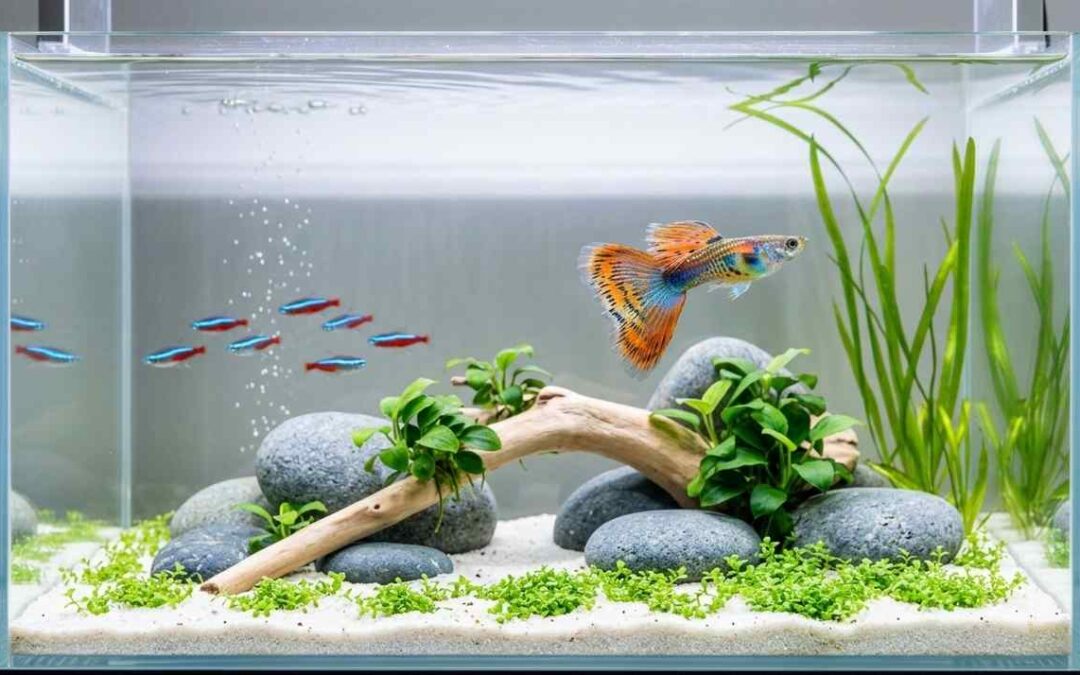
Live or artificial plants can provide useful hiding areas. Decorations, caves, and other aquarium-safe structures can also give fish places to retreat when they feel threatened or want some cover.
Plants help make the tank feel natural, but be sure to leave enough open space for your guppies to swim. Don’t fill the tank with so many decorations that the fish can’t move easily.
A safe tank also means keeping stress low. Sudden changes, aggressive fish, strong water flow, too many fish, or dirty water can all make things tough for guppies.
When you add decorations, check that there are no sharp or rough edges that could hurt your guppies’ fins.
7. Social Company and Regular Maintenance
Guppies are social and usually do better with other peaceful guppies instead of being alone. Picking the right tankmates is important, so check our setup guide for more on which fish get along with guppies.
A group of three or more guppies gives them social company, as long as the tank is big enough and well cared for. If you keep both males and females, it’s best to have more females than males because males often chase females.
A common tip is to keep two or three females for every male. This way, no single female gets chased all the time.
But just because guppies like company doesn’t mean you should add too many fish. Too many fish can quickly make the water dirty.
Regular care is just as important as having the right number of fish. Test the water, do partial water changes, check the filter, clean up waste, and keep an eye on your guppies.
Doing small maintenance tasks regularly is much easier than trying to fix a tank that’s been ignored.
Common Mistakes That Can Threaten a Guppy’s Survival
Knowing what guppies need also means knowing what to avoid.
One of the biggest mistakes is putting too many fish in the tank. Too many fish make more waste than the tank can handle.
Another problem is adding guppies to a tank that isn’t fully set up. A new tank can have dangerous spikes in ammonia and nitrite. If you’re starting a new tank, check our guppy aquarium setup guide to get the basics right before adding your fish.
Overfeeding is another common mistake. Extra food doesn’t go away. It just turns into waste in the tank.
Avoid sudden changes in temperature or water chemistry. When you change the water, use treated water that’s close to the tank’s current conditions.
Finally, don’t forget about compatibility. Guppies can get stressed or hurt if they live with aggressive or fin-nipping fish.
A Simple Guppy Survival Checklist
Before bringing guppies home, run through this quick checklist:
- Aquarium is preferably 10 gallons or larger for a small group
- Tank has a secure lid
- Water is treated with a suitable conditioner
- Ammonia is 0 ppm
- Nitrite is 0 ppm
- Nitrate is kept low
- Water temperature stays around 72°F–82°F
- pH is approximately 7.0–8.0
- Gentle filtration is installed
- Fish receive a balanced omnivorous diet
- Plants or hiding areas are available
- Tankmates are peaceful and compatible
- Regular water testing and partial water changes are part of the routine
Frequently Asked Questions
What do guppies need to survive in an aquarium?
Guppies need a properly sized aquarium, clean and dechlorinated water, stable temperature and water parameters, filtration, nutritious food, safe surroundings, compatible tankmates, and regular maintenance. A stable environment is just as important as food and tank size.
What size tank do guppies need?
A 5-gallon aquarium may suit a couple of guppies with appropriate care. Still, a 10-gallon tank or larger is generally a better selection for maintaining a small group and keeping water conditions more stable.
What temperature do guppies need?
Guppies generally do well in water between 72°F and 82°F. Keeping the temperature stable is important, and a heater may be useful when the room temperature is too cool or fluctuates significantly.
Do guppies need a filter to survive?
A filter is strongly recommended because it helps remove debris, supports beneficial bacteria, and keeps the aquarium environment more stable. Choose one with gentle flow because excessive current can make swimming difficult for guppies.
Do guppies need a heater?
A heater isn’t necessarily required in every home, but it can be important if the aquarium’s temperature regularly falls below the appropriate tropical range. Use a thermometer to monitor the water rather than relying on room temperature alone.
How often should guppies be fed?
Adult guppies can generally be fed once or twice daily in small portions. Avoid giving more food than they can consume because uneaten food contributes to waste and can negatively affect water quality.
Can guppies survive without plants?
Yes. Guppies don’t absolutely require live plants, but plants and other aquarium-safe hiding areas can make the environment more comfortable and provide cover. Artificial plants can also serve this purpose as long as they don’t have sharp edges.
Final Thoughts
So, what do guppies need to survive? They need more than just food and a tank. Healthy guppies rely on stable water, enough space, the right temperature, good filtration, a balanced diet, a safe environment, social company, and regular care.
The good news is that none of these steps are complicated. Start with the right size tank, keep up good water habits, feed your fish properly, and pay attention to how they act. For more tips on keeping guppies healthy, check out our guide on how long guppies live.
Once you have the basics covered, taking care of guppies gets much easier. You’ll have a better chance of seeing your fish stay active, colorful, and healthy for years.