Cichlids are fascinating freshwater fish to keep. They come in many colors, sizes, and personalities, so there is no single aquarium setup that works for every type.
A good cichlid environment is not simply about looks. It should have the right water conditions, enough space for swimming, spots for territories, places to hide, and features that let fish dig, explore, and breed as they would in nature.
The good news is you do not have to recreate an entire lake at home. By learning about cichlids’ natural habitats, you can make better choices when setting up and caring for your aquarium.
What Is a Cichlid Environment?
A cichlid environment is the physical setup and water conditions that help cichlids feel comfortable and behave naturally.
This is about more than just tank size. Think about these factors:
- Water temperature
- pH and hardness
- Filtration and water quality
- Tank dimensions
- Substrate
- Rocks and caves
- Plants and driftwood
- Open swimming areas
- Territorial boundaries
- Hiding places
- Compatible tank mates
Cichlids live in warm, tropical, and subtropical freshwater areas in Africa, Central and South America, and parts of Asia. Their habitats include rocky lake shores, sandy bottoms, rivers, streams, and places with lots of plants.
This variety is important because a Malawi cichlid and a South American cichlid can have very different needs, even though they are both cichlids.
Before choosing decorations or changing the water, find out which species you have. The best setup is the one that fits your specific fish.
Where Do Cichlids Live in the Wild?
Cichlids have an impressive geographic distribution. Some of the most famous species come from Africa’s massive East African Rift Lakes, including Lake Malawi, Lake Tanganyika, and Lake Victoria. Others originate from rivers, streams, and lakes throughout Central and South America.
Their natural homes can look very different from one another.
African Rift Lake Cichlids
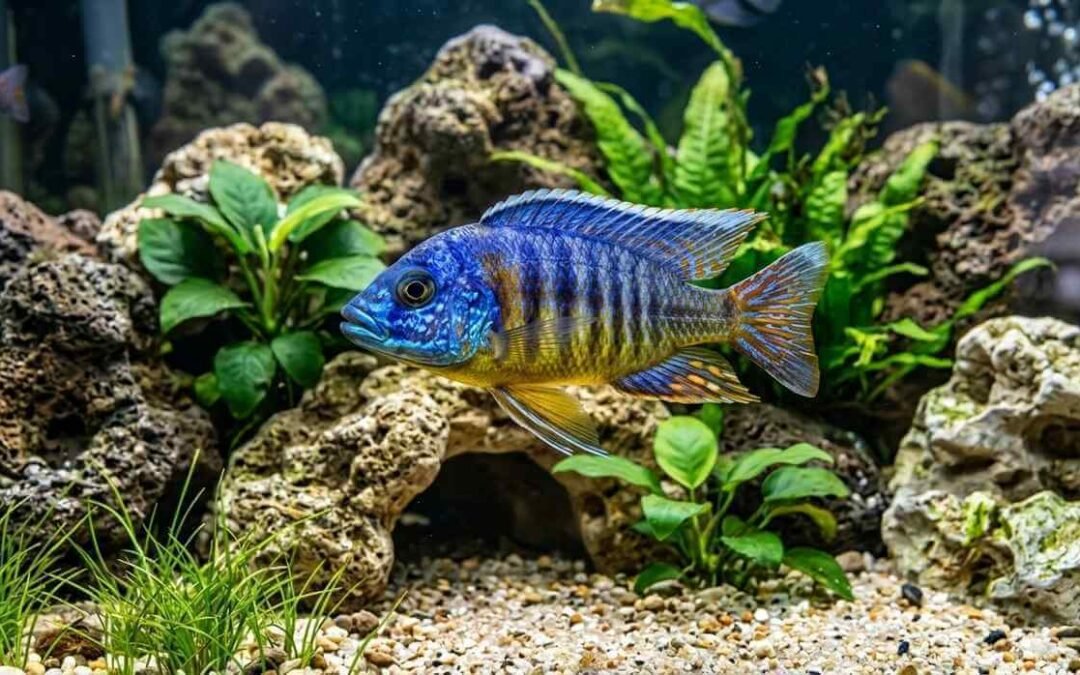
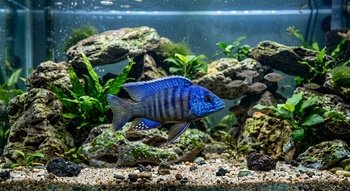
Many African cichlids are associated with rocky shorelines, caves, underwater rock formations, and sandy areas. Some species spend much of their time around rocks, while others specialize in open sandy habitats.
The water in many African Rift Lake environments is relatively hard and alkaline. Many African cichlids thrive in water with a pH around 7.5 to 8.5, although exact requirements vary between species and locations.
This is why an African cichlid tank often looks very different from a planted South American aquarium.
South and Central American Cichlids
South and Central American cichlids live in many different types of habitats.
Depending on the species, they may be found around:
- Rivers and streams
- Rocky areas
- Sandy or muddy bottoms
- Felled branches and submerged wood
- Dense vegetation
- Slow-moving or flowing water
Some species enjoy having plants and driftwood, but others dig so much that they pull up anything you try to plant.
When setting up a cichlid tank, do not just copy an aquarium you saw online. Focus on recreating the natural habitat your fish comes from.
Choose the Right Tank Size
Tank size is one of the most important parts of a good cichlid setup.
Cichlids can grow to many different sizes. Small dwarf cichlids can live in smaller tanks, but larger species like Oscars need much more space.
As a starting point, some small dwarf cichlids can live in tanks around 10 gallons if their needs are met. Larger species may need 75 gallons or more.
However, the number of gallons is not the only thing that matters.
A long, wide tank is often better for territorial cichlids than a tall, narrow one. It provides more swimming space and helps separate territories.
Before buying a tank, consider the fish’s:
- Adult size
- Swimming behavior
- Territoriality
- Social requirements
- Expected tank mates
- Aquascaping needs
For a more detailed look at equipment, filtration, cycling, and tank dimensions, see Aquarium Buddies’ Cichlid Aquarium Setup guide.
Get the Water Conditions Right
Good water quality is one of the most important parts of any cichlid tank.
Cichlids usually come from warm water, and many like temperatures above 68°F (20°C). In your tank, set the temperature based on the species you have, not just one number for all cichlids.
Many popular cichlids do well in water from the mid-70s to low-80s Fahrenheit, but it is important to check what your species needs.
For example, African Rift Lake cichlids often prefer harder, alkaline water, while many South American species are associated with softer water and lower pH.
Temperature Stability Matters
Setting the heater once and then forgetting about it is not enough.
Sudden temperature changes can stress your fish. Use a reliable heater and thermometer, and check the tank regularly.
Aquarium Buddies’ Cichlid Fish Water Temperature guide gives a deeper look at temperature ranges for different types of cichlids.
Don’t Chase a “Perfect” pH
A common mistake is changing the water every time the test kit does not show the exact number you want.
It is better to keep the water stable and suitable instead of making big changes all the time.
Instead, learn the natural requirements of your particular species and keep consistent conditions through good filtration, regular testing, and appropriate water changes.
Also, watch ammonia, nitrite, and nitrate levels. Even a beautiful tank cannot make up for bad water quality.
Build the Environment With Rocks, Caves, and Hiding Places
One thing that can really change a cichlid tank is how you use rocks and other hard decorations.
In the wild, many cichlids make their homes around rocks, caves, and other natural structures. These features are not just for looks. They offer shelter, create spots for breeding, mark out territories, and provide safe places to hide.
A well-designed tank lets fish get away from each other instead of always being visible.
This is especially helpful for territorial species.
Create Territories Instead of One Giant Open Space
If you put several territorial fish in an empty tank, they can all see each other and have nowhere to hide.
If you add rocks, caves, and barriers in the tank, the fish can have their own spaces.
The fish can establish separate areas.
This is why careful aquascaping can help reduce chasing and stress.
Aquarium Buddies’ guide to Rocks for a Cichlid Tank covers different rock choices, safe placement, and ways to build stable structures.
When stacking rocks, always think about safety. Cichlids may dig under rocks and move the substrate, so make sure heavy rocks cannot fall on your fish.
Choose a Natural Substrate
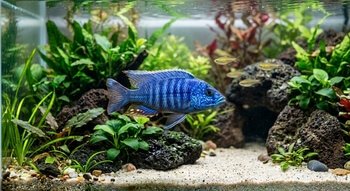
A sandy bottom can be an excellent choice for many cichlid aquariums because it resembles the natural environments of numerous species.
Some cichlids like to dig, sift, or move substrate around while searching for food or establishing territories.
Fine aquarium sand can also serve a purpose beyond just looking nice.
However, substrate choice should still depend on the species.
African cichlids may benefit from substrates that complement their naturally hard, alkaline environment, while certain South American cichlids may have different preferences.
Do not choose substrate just because it looks good in a photo. Think about how your fish interact with the bottom of the aquarium.
What About Plants and Driftwood?
Plants can make an aquarium look great, but they are not always right for every cichlid.
Some cichlids dig aggressively, chew vegetation, or uproot plants as they rearrange their environment.
Others appreciate the cover plants provide.
The same applies to driftwood. It can create shelter and a natural appearance, but it can likewise influence water chemistry in certain setups.
The key is to match the aquascape to the fish, not force the fish to fit your preferred setup.
For more ideas about functional decorations, check out Aquarium Buddies’ Cichlid Tank Ornaments guide.
How the Environment Affects Cichlid Behavior
A good cichlid environment is not only about keeping fish alive. It should let them behave more naturally.
Cichlids are often territorial, and many establish preferred areas for feeding, hiding, spawning, or resting.
When an aquarium lacks structure, a dominant fish may be able to chase another fish across the entire tank.
Adding rocks, caves, plants, or other visual barriers can break up these sightlines and give subordinate fish opportunities to retreat.
That doesn’t mean decorations will magically eliminate aggression. Species compatibility, stocking levels, tank size, and individual temperament still matter.
Think of aquascaping as one tool for managing the environment, not a certain solution to every behavior problem.
Don’t Forget Filtration and Water Movement
Cichlids can produce considerable waste, especially larger species and heavily stocked aquariums.
A good filtration system helps remove physical waste and supports beneficial bacteria that process toxic nitrogen compounds.
Your filter should be the right size for your aquarium and the number of fish you have. Water movement should give enough circulation without causing too much turbulence for organisms that like calmer water.
Periodic maintenance is equally important.
A healthy routine can include:
- Testing water parameters
- Performing appropriate partial water changes
- Cleaning equipment when necessary
- Checking filter media
- Removing uneaten food
- Monitoring fish behavior
- Watching for sudden changes in water quality
A natural-looking aquarium still needs regular care to stay healthy for your fish.
Create a Cichlid Environment Checklist
Before adding fish, run through this quick checklist:
Tank
- Is the aquarium large enough for the adult fish?
- Is there enough horizontal swimming space?
- Is the tank properly cycled?
Water
- Is the temperature appropriate and stable?
- Does the pH match the species?
- Is the water hardness suitable?
- Are ammonia and nitrite at safe levels?
Aquascape
- Is the substrate appropriate?
- Are rocks securely positioned?
- Are there caves or hiding areas?
- Are there visual barriers?
- Is there still enough open swimming space?
Stocking
- Are the fish compatible?
- Is the aquarium overcrowded?
- Can individual fish establish territories?
If you are setting up a community aquarium, Aquarium Buddies’ guide on what fish can live with cichlids can help you consider temperament, size, water needs, and tank zones before adding new fish.
Common Cichlid Environment Mistakes to Avoid
Even experienced fish keepers can make mistakes when setting up a cichlid tank. Some of the most common include:
Making Every Cichlid Tank the Same
Cichlids are not a single-species fish group. Their environmental needs can vary a lot.
Prioritizing Looks Over Function
A tank can look beautiful while offering very little shelter or territory.
Overcrowding the Aquarium
Adding more fish is not a substitute for giving them enough space and structure.
Ignoring Adult Size
Always plan for the adult fish, not the size of the juvenile you bring home.
Constantly Changing Water Chemistry
Avoid making big changes just to reach a certain number. The goal is to keep conditions stable for your species.
Leaving No Open Swimming Space
Rocks and caves are useful, but do not fill the entire aquarium with decorations. Cichlids still need space to swim.
The Bottom Line
Creating the right cichlid environment starts with one simple idea: build the aquarium to suit the fish, not the other way around.
Cichlids live in a remarkable variety of tropical and subtropical freshwater habitats. Some come from rocky African lakes with hard, alkaline water, while others inhabit rivers and streams surrounded by plants, wood, sand, and softer water.
That means there isn’t one universal formula.
Proceed by identifying your species. Then recreate the most important aspects of its natural habitat: appropriate water conditions, adequate space, suitable substrate, secure rocks or caves, useful hiding places, and enough open swimming room.
You do not need to perfectly recreate Lake Malawi or a South American river at home. Instead, understand what your fish naturally needs and create a safe, stable aquarium with those conditions.
When you do this, your tank becomes more than just a container of water. It becomes a place where your cichlids can explore, set up territories, interact naturally, and thrive.
FAQs About Cichlid Environment
What is the ideal environment for cichlids?
The ideal environment depends on the species, but most aquarium cichlids need warm, stable water, adequate swimming space, good filtration, suitable substrate, and areas where they can hide or establish territories. African and South American cichlids can have significantly different water requirements.
What temperature is best for a cichlid environment?
Many commonly kept cichlids do well in warm water around 74–82°F (23–28°C), although the ideal range varies by species. Stability is also important, so use a reliable heater and thermometer rather than allowing frequent temperature swings.
Do cichlids need rocks and caves?
Many cichlids benefit from rocks, caves, and other structures because these features provide hiding places, territorial boundaries, and potential spawning areas. They can also create visual barriers that help reduce constant chasing.
Do cichlids need sand?
Not every cichlid requires sand, but it can be an excellent substrate for those species that naturally dig or sift through sandy bottoms. Always consider the behavior and natural habitat of the particular species before choosing substrate.
Can you keep plants in a cichlid aquarium?
Yes, but it depends on the species. Some cichlids may uproot or damage plants while digging, while others can live comfortably with vegetation. Choose plants and aquascaping materials based on your fish’s behavior.
How can I reduce aggression in a cichlid tank?
Start with an appropriately sized aquarium and compatible species. Use rocks, caves, and visual barriers to divide territories, avoid overcrowding, and provide enough hiding places. A good environment can reduce conflict, but it cannot overcome fundamental incompatibility between aggressive species.
How often should I maintain a cichlid environment?
Regularly monitor temperature and water parameters, perform appropriate partial water changes, remove debris and uneaten food, and inspect filtration equipment. The exact maintenance schedule depends on tank size, stocking, filtration, feeding, and species.