
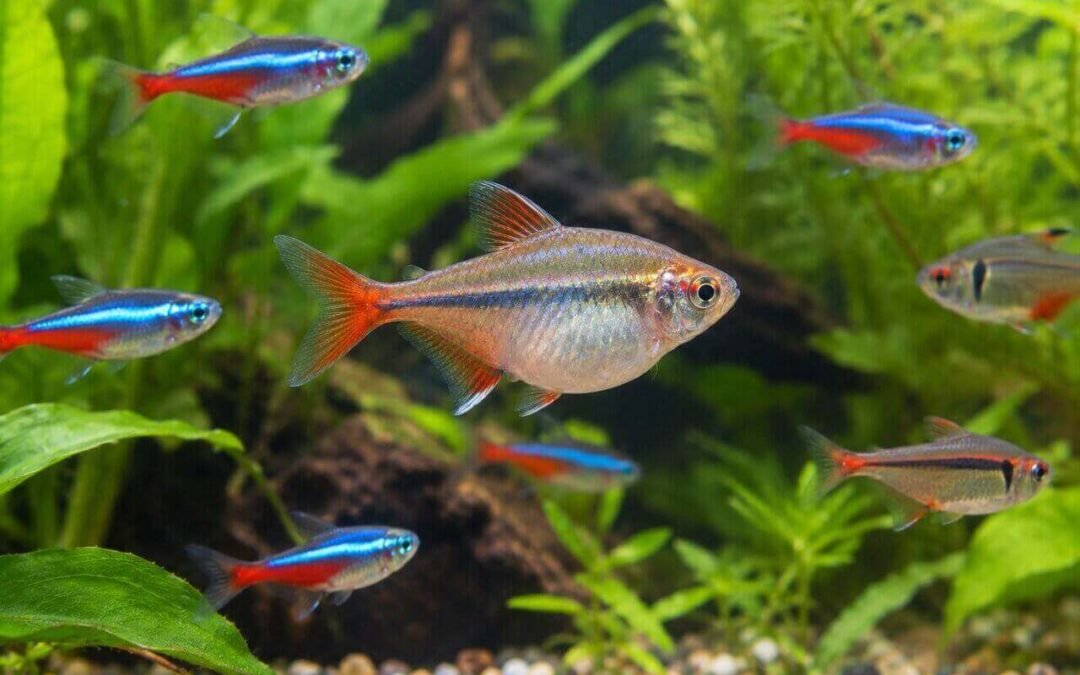
If your tetra starts to look a bit rounder than normal, you might wonder how to tell if she’s pregnant. This is a common question, especially when a female’s belly becomes noticeably fuller.
First, it’s important to know that tetras don’t get pregnant like live-bearing fish. Instead, female tetras lay eggs during spawning instead of giving birth to live young.
People often say a tetra is “pregnant” because it’s a simple way to describe a female carrying eggs. The correct term is gravid, which means she has eggs developing for spawning.
So how can you tell? A rounder belly is one sign, but there are others. Changes in body shape, behavior, how she interacts with males, and eventually seeing eggs can all give you clues.
Do Tetra Fish Actually Get Pregnant?
No, not in the usual sense.
Unlike guppies, mollies, and other live-bearing aquarium fish, tetras reproduce by laying eggs. A female tetra develops eggs inside her body. When conditions are right, she releases those eggs, usually around plants, spawning materials, or another suitable surface depending on the species.
A male then fertilizes the eggs externally.
That’s why some aquarium keepers say a tetra is “pregnant,” even though “carrying eggs” or “gravid” is more accurate.
If you have a community aquarium, keep in mind that breeding tetras can be tricky. Adult fish might eat the eggs, and the tiny fry can also be eaten by other fish.
If you’re new to keeping tetras with other fish, our tetra compatibility guide can help you choose good tank mates.
7 Signs Your Tetra May Be Carrying Eggs
So how do you know if your tetra is carrying eggs? It’s best to look for a few signs together instead of just one change.
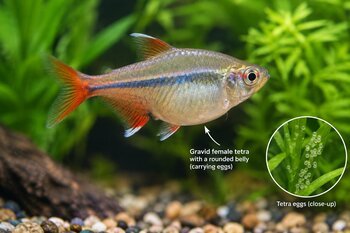
1. Her Belly Looks Rounder Than Usual
The most obvious sign is usually a plump, rounded belly.
As eggs grow, her belly can look fuller than normal. This is often easiest to see from the side.
But not every round belly means she has eggs. A tetra can also look swollen after a big meal or due to digestive or health issues.
The key is to watch for a gradual, smooth change instead of sudden or odd swelling.
2. Her Body Looks Thicker Than a Male’s
Female tetras are usually a bit thicker than males, even when they’re not carrying eggs.
Males in many tetra species look slimmer and more streamlined, while females often have a fuller, more curved lower body.
When a female is carrying eggs, this difference can be even easier to spot.
Looking at your fish from above can help. A female with eggs may look broader through the belly than the males in the group.
Remember, body shape can vary between tetra species, so don’t rely on size alone to decide if a female has eggs.
3. Her Abdomen Has a Smooth, Plump Appearance
Another helpful clue is where the fullness shows up on her body.
A female with eggs usually has a smooth, even fullness across her belly. She may look more rounded and plump than normal.
This is different from abnormal swelling, which can look uneven, very pronounced, or come with other symptoms.
If your tetra is swimming normally, eating well, and acting like herself while slowly getting fuller, she’s more likely carrying eggs.
4. Male Tetras Start Paying More Attention to Her
Behavior is another clue to watch for.
As spawning gets closer, males may pay more attention to females. You might see males chasing them, swimming nearby, or acting more active around them, depending on the species and tank setup.
But don’t mix up normal schooling with courtship. Tetras often swim together, and sometimes chase each other even when they’re not about to spawn.
Look for a mix of physical and behavioral changes, not just one thing.
5. She Becomes More Interested in Spawning Areas
A female getting ready to spawn may spend more time near places where she can lay eggs.
For some tetras, this could be fine-leaved plants, moss, spawning mops, or other things in the tank.
A planted tank gives good cover and places to spawn, but different tetra species may breed in different ways.
If your fish is getting rounder and spending more time near spawning spots, it could mean breeding is coming soon.
6. You Notice Changes in Spawning Behavior
As spawning time nears, you might see more activity from both males and females.
Some tetras get more energetic, with males chasing females. The fish may swim through plants or around spawning spots before the female lays her eggs.
After spawning, the eggs are often scattered and not guarded.
This is a key difference from some other aquarium fish. Many tetras don’t care for their eggs after spawning.
This means the eggs can be at risk right away.
7. You Actually Find Tetra Eggs
Finding eggs is the surest sign your female has spawned.
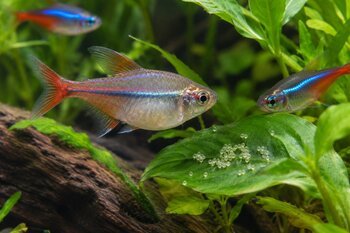
Tetra eggs are tiny and can be hard to see. Depending on the species and your tank, they might be on plants, spawning material, or other surfaces.
Once you spot eggs, you know spawning has happened, but that doesn’t mean the eggs will survive.
In a community tank, adult tetras and other fish might eat the eggs. If you want to breed tetras, you may need a separate breeding tank or other ways to protect the eggs and fry.
Is My Tetra Carrying Eggs or Is She Sick?
This is one of the most important things to think about if you see a swollen tetra.
A round belly doesn’t always mean your fish has eggs.
Other things can also make a tetra’s belly look bigger than normal.
Overfeeding
Sometimes it’s simple: your fish just ate too much.
A tetra can look fuller for a while after a big meal, especially if you’ve been feeding more than usual.
If the swelling goes away and your fish acts normal, overfeeding was probably the cause.
Bloat or Constipation
Digestive problems can also make the belly swell.
Constipation can happen if fish eat the wrong foods or too much. Bloating can also make a fish look rounder than normal.
Watch for changes in appetite, waste, swimming, and how long the swelling stays.
Dropsy and Other Illnesses
Some illnesses can also make a fish’s body swell.
Dropsy, for example, causes fluid buildup and can make the body look much bigger. A worrying sign is scales sticking out, which can look like a pinecone.
If your tetra is swollen and also tired, not eating, having trouble swimming, or showing other odd symptoms, don’t just assume she’s carrying eggs.
If you think your fish might be sick, focus on finding and treating the health issue instead of assuming it’s breeding.
Egg-Bound Females
Another possible cause is an egg-bound female, which means she can’t release her eggs normally.
This can be serious because eggs stuck inside can cause problems. If a female is very swollen and seems distressed or acts strangely, don’t assume she’s “pregnant.”
The safest thing to do is look at your fish’s overall health and ask a qualified aquatic vet or experienced fish expert for aid if needed.
How Long Does a Tetra Carry Eggs?
There isn’t a single timeline for all tetra species.
Egg development and spawning depend on things like species, age, diet, water conditions, temperature, and other factors.
Instead of counting days, watch for changes in your fish’s body and behavior.
A slow increase in belly size, along with normal activity and more spawning behavior, tells you more than a set timeline.
If you want to breed tetras, keeping the tank conditions stable and healthy is more helpful than trying to force them to spawn.
What Do Tetra Eggs Look Like?
Tetra eggs are very small and easy to miss.
They can look clear, see-through, or a bit white, depending on the species and stage. In a planted tank, they often blend in with plants, moss, or the substrate.
If you want to find them, check the tank carefully soon after you think spawning happened.
A magnifying glass or good lighting can help you spot the tiny eggs.
Once you find eggs, the next step is keeping them safe.
Do Tetras Eat Their Eggs?
Yes, they can.
Many tetras don’t protect their eggs after spawning, and adult fish may eat any eggs they find.
That’s one reason it can be hard to breed tetras in a community tank.
If you want to raise fry, separating adults from the eggs or using a special breeding tank can help the eggs survive.
You’ll also need to plan for after the eggs hatch, since tetra fry are tiny and need the right food and water conditions.
What Should You Do If Your Tetra Is Carrying Eggs?
If your female looks healthy and you think she has eggs, don’t worry or make big changes to the tank.
Instead:
- Keep water quality stable.
- Avoid sudden changes in temperature or chemistry.
- Provide appropriate nutrition without overfeeding.
- Reduce unnecessary stress.
- Provide plants or other suitable spawning areas if you’re intentionally breeding.
- Watch for actual spawning behavior.
- Monitor the fish for signs of illness.
If you’re not trying to breed your tetras, you probably don’t need to do anything special. A female with eggs can spawn naturally as part of the tank’s normal cycle.
If you’re new to keeping tetras, it’s a good idea to review the basics of tetra care and tank setup so your fish stay healthy long-term.
Frequently Asked Questions
Can tetra fish get pregnant?
Not in the same way live-bearing fish do. Tetras lay eggs rather than giving birth to live babies. A female can carry developing eggs before releasing them during spawning, which is why aquarists often describe her as “pregnant.”
How do you know if a tetra fish is pregnant?
Look for a gradually rounded, plumper abdomen; a thicker body shape than males; normal activity and appetite; increased attention from males; and spawning behavior. Finding eggs is the strongest evidence that spawning has occurred.
What does a pregnant tetra fish look like?
A female carrying eggs generally looks fuller and rounder through the abdomen. The fullness is usually smooth and evenly distributed rather than appearing as sudden or irregular swelling.
How can you tell if a tetra is carrying eggs or is bloated?
Consider the fish’s overall condition. A gravid female may remain active and continue eating normally while gradually becoming rounder. Bloating, constipation, or illness may be accompanied by appetite loss, lethargy, abnormal swimming, unusual waste, or other symptoms.
Do tetra fish lay eggs in a community tank?
Yes. Tetras can spawn in community aquariums, but their eggs may not survive because adult fish and other tank mates can eat them.
Do tetras eat their own eggs?
Some tetras may eat eggs they encounter. If you’re trying to raise tetra fry, a separate breeding environment or egg-protection method can improve survival.
How long does it take for tetra eggs to hatch?
The exact time varies according to species and environmental conditions. Temperature and water quality can influence development, so it’s better not to assume one incubation period applies to every tetra species.
What should I do if my tetra looks extremely swollen?
Don’t automatically assume she’s carrying eggs. Look for additional symptoms such as lethargy, loss of appetite, abnormal swimming, or scales protruding outward. Significant or worsening swelling can indicate a health problem and may require professional aquatic-health advice.
Final Thoughts
So how do you know if your tetra is pregnant? The main thing to remember is she isn’t technically pregnant; she’s probably carrying eggs, or gravid.
A round, plump belly is one of the easiest signs to spot, especially if it grows slowly and the fish stays healthy and active. A thicker body, more attention from males, interest in spawning spots, and behavior changes are other clues.
But don’t just look at a swollen belly. Overfeeding, constipation, bloating, dropsy, and egg problems can all make the belly swell.
If you look at your tetra’s appearance, behavior, appetite, and overall health together, you’ll have a better idea if she’s getting ready to spawn or if something else is going on.
For aquarium keepers, knowing the difference is important. Understanding your fish helps with breeding and makes you a more observant, responsible fish keeper.