
If you’ve ever checked out freshwater aquarium fish, you’ve probably seen cichlids. They’re colorful, full of personality, and fun to watch. But there’s a lot more to them than just how they look or act in the tank.
What makes cichlids so interesting is the great variety there is among the different species. A few of them are small and suitable for small tanks, whereas others grow to be several feet long. Some of them feed on plants, some catch other animals, and some even carry their young in their mouths.
Curious to learn more? Here are 25 facts that highlight just how unique and diverse cichlids are.
Cichlid Facts at a Glance
| Scientific family | Cichlidae |
| Type | Freshwater fish |
| Known species | More than 1,700 described species |
| Main distribution | Africa, Central and South America, Middle East and parts of Asia |
| Size | About 1 inch to nearly 3 feet, depending on species |
| Diet | Herbivorous, carnivorous, omnivorous, planktivorous, or detritivorous |
| Behavior | Can range from peaceful to highly territorial |
| Parenting | Many species provide extensive parental care |
| Mouthbrooding | Common among several cichlid groups |
| Popular aquarium examples | Oscars, angelfish, discus, African cichlids, and more |

25 Fascinating Cichlid Facts
1. Cichlids Are One of the Largest Vertebrate Families
Cichlids make up a large and varied group, with more than 1,700 species. They include everything from tiny dwarf cichlids to big predators. Well-known aquarium fish like angelfish, discus, and Oscars are all cichlids, and tilapia, a common food fish, is one as well. This wide range is a big part of what makes cichlids so appealing to fishkeepers.
2. Cichlids Are Pronounced “Sick-Lid”
You may not know how to say it if you’ve only just seen the word.
“Cichlid” is pronounced “sick-lid.” The spelling looks tricky because of its scientific background, but it’s actually easy to say.
It’s a small thing, but beginners usually like learning this fun fact when they get into the hobby.
3. Cichlids Can Be Tiny or Surprisingly Huge
Cichlids can be as small as an inch or grow to nearly three feet long. For example, Boulengerochromis microlepis from Lake Tanganyika is among the biggest. Because sizes vary so much, it’s important to learn about each species’ care needs. What works for a small cichlid might not suit a large one, so don’t choose a fish just by its appearance.
4. Cichlids Have a Second Set of Jaws
Cichlids have a unique feature: a second set of jaws called pharyngeal jaws, located deeper in their throats. Their main jaws grab food, and these extra jaws help break it down. Different cichlid species have pharyngeal jaws suited to their diets. Some can crush hard foods, while others are better for grazing, scraping, or catching prey. This is just one of the many things that make cichlids special.
5. Their Diets Can Be Completely Different
Different cichlid species eat different things, so it’s important to feed each one what it needs instead of assuming they all eat the same food.
6. Cichlids Are Famous for Their Bright Colors
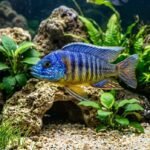
Cichlids are famous for their bright, beautiful colors. These colors can help them attract mates or show dominance. Their colors can also change depending on their mood, breeding, or even stress.
7. African Rift Lakes Are Cichlid Hotspots
Africa’s Great Rift Valley lakes, especially Lake Malawi, Lake Tanganyika, and Lake Victoria, have some of the greatest cichlid variety in the world.
Thousands of cichlid species and their close relatives have evolved in these lakes. This variety is due to adaptive radiation, which means groups change over time to fill different roles in their environment.
For aquarium fans, “African cichlid” doesn’t mean just one type of fish. Species from different lakes often need very different care.
8. Cichlids Live in More Places Than Africa
Cichlids live not just in Africa, but also in Central and South America, the Middle East, India, Sri Lanka, Madagascar, and other places. They can be found in all kinds of freshwater environments, like lakes, rivers, and streams, on both rocky and sandy bottoms. If you know where your cichlid comes from, you can set up your tank to match its natural home, which helps keep your fish happy and healthy.
If you want some advice on how to arrange these conditions, you might as well have a look at our guide to cichlid environments.
9. Most Cichlids Prefer Warm Freshwater
The cichlids in question are native to warm tropical or subtropical waters and, in general, thrive in water that is above 68°F (20°C); however, the ideal temperature varies according to the species.
That is yet another reason why you shouldn’t apply the same care routine to all cichlids.
The Lake Malawi cichlid, the Oscar, and the South American dwarf cichlid all belong to the same family, even though they are from quite different places.
10. Some Cichlids Are Extremely Territorial
Cichlids are famous for being territorial. If you see one defending a spot in the tank, it’s just following its natural instincts. They often claim caves, rocks, or certain areas and guard them from other fish, especially during breeding. To reduce stress and aggression, make sure your aquarium has enough space, plenty of hiding places, and some visual barriers.
11. Not Every Cichlid Is Aggressive
A common myth is that all cichlids are aggressive, but that’s not true.
While some cichlid species are highly territorial, others can be quite peaceful provided that they have suitable tank mates and conditions.
In the same species, individual fish can have their own personalities.
Instead of wondering if all cichlids are aggressive, it’s better to learn about the behavior and compatibility of the specific species you want.
12. Some Cichlids Are Clever Hunters
Some cichlids are clever hunters. They use tricks like camouflage or sneaky moves to catch prey, which makes their hunting style surprisingly complex.
13. Cichlids Can Be Excellent Parents
One of the most interesting aspects of cichlids is the way in which they look after their offspring.
Most fish lay their eggs and give no care to them, but cichlids are an exception. With different species, the parents may guard the eggs, protect the young, clean the spawning site, defend their area, or even carry the offspring.
It’s remarkable for people who keep aquariums to watch a fish which is usually territorial grow very protective of its young.
14. Some Cichlids Carry Their Babies in Their Mouths
Some cichlids are mouthbrooders. They protect their eggs or babies by carrying them in their mouths, sometimes even skipping meals to keep them safe.
15. Cichlids Can Dig in Their Aquarium
Since cichlids like to dig and move things about in the tank, allow for the possibility of the gravel being moved and always use solid decorations.
16. Some Cichlids Move Rocks and Decorations
Digging isn’t the only way cichlids change their environment.
Some species push, move, or rearrange things in their tank. Rocks are especially important because they create hiding spots, boundaries, or places to lay eggs.
If you have a species that loves rocks, set up your tank to correspond to its natural habits. Check out our guide to rocks for cichlid tanks to learn why rock choice and placement are important.
17. Cichlids Communicate With Body Language
Fish don’t talk, but cichlids use lots of visual signals to communicate.
A person’s posture, coloring, movements, chasing behavior, the way the fins are displayed, and other behaviors can be used to show aggression, submission, breeding readiness, or ownership of a territory.
When you are familiar with your fish’s typical behavior, it is then easier to notice these signals.
18. Cichlids Can Look Very Different From One Another
Cichlids come in many shapes, sizes, and colors. Their variety, from tiny dwarfs to large Oscars, is a big reason why fish lovers and scientists find them so fascinating.
19. Oscars Are Cichlids
If you know someone with an Oscar fish, here’s a fun fact: Oscars are cichlids.
Oscars (Astronotus ocellatus) are popular because of their impressive size, intelligence, personality, and remarkable appearance.
Oscars grow large as adults, so they need much more space than smaller cichlids. Always check the adult size and needs of a species before bringing one home.
20. Angelfish Are Cichlids Too
Angelfish might not look like the typical bulky cichlid, but they are definitely part of the Cichlidae family.
Their tall fins and graceful shape make them look very different from many African or large American cichlids.
This shows that the term “cichlid” includes many different types of fish, not just one appearance or behavior.
21. Discus Are Also Cichlids
Discus are another popular type of cichlid.
They’re known for their round shape, bright colors, and for being a bit more challenging to keep.
The fact that discus are cichlids shows how broad this group is. When someone says they keep cichlids, you still need to ask which species to know how to care for them.
22. Tilapia Belong to the Cichlid Family
Tilapia, a fish eaten around the world, actually belong to the cichlid family, just like Oscars, angelfish, and discus. Cichlids are not only attractive as pets but also play a big role in fish farming and have both economic and environmental value.
23. Cichlid Parenting Can Be Surprisingly Complex
It’s not enough for cichlids just to lay eggs and then leave.
The kind of behaviour that occurs will vary with the species, since in some cases the parents will choose and clean out a surface for spawning, look after the eggs, defend the fry, move the young, or use mouthbrooding as a means of protecting the developing young.
This level of parental care is one reason cichlids are so interesting to watch.
It can also change how fish behave in a tank. A usually calm fish might become much more territorial when it starts breeding.
24. Cichlid Behavior Can Change During Breeding
Cichlids can become more aggressive when they’re getting ready to breed. Extra chasing or digging is usually normal, but sometimes aggression happens because of stress or a crowded tank.
25. There Is No Single “Cichlid Setup”
There’s no single perfect cichlid tank setup. Each species has its own needs, so always research their size, care, and habitat before getting one.
What These Cichlid Facts Mean for Aquarium Keepers
It helps to connect what you learn about cichlids’ natural behavior to how you care for them in your tank.
For example, a species that lives around rocks in the wild will do better with rocks and hiding spots in the tank. A digging fish needs the right kind of substrate. Territorial species need more space and carefully chosen tank mates.
Diet is just as important as tank setup. Since cichlids have many different roles in nature, feed them based on their specific needs, not a general diet.
The same goes for water conditions. Where your cichlid comes from will help you figure out what temperature, hardness, pH, water flow, and cover it likes best.
If you want a community tank, make sure to research which fish can live with cichlids before adding them as tank mates.
FAQs About Cichlid Facts
What are some interesting facts about cichlids?
Some of the most interesting cichlid facts include their huge diversity, specialized pharyngeal jaws, wide range of body sizes, territorial behavior, complex parental care, and mouthbrooding. Some popular aquarium fish, including Oscars, angelfish, and discus, are cichlids.
How many cichlid species are there?
Scientists have described more than 1,700 cichlid species. Estimates vary while scientists continue to study and classify the group, so it’s better to use an approximate figure rather than suggest a single fixed number.
Are all cichlids aggressive?
No. Cichlid behavior varies greatly between species. Some are strongly territorial, while others can be comparatively peaceful. Tank size, breeding activity, individual temperament, and tank mates could also modify aggression.
Do cichlids take care of their babies?
Many cichlid species provide significant parental care. Depending on the species, parents may guard eggs and fry, defend a territory, clean spawning surfaces, move young, or carry eggs and fry inside their mouths.
Where do cichlids naturally live?
Cichlids are primarily freshwater fish found across Africa, Central and South America, and parts of the Middle East and Asia. African Rift Lakes such as Malawi, Tanganyika, and Victoria are especially famous for their extraordinary cichlid diversity.
How big do cichlids get?
Cichlid size varies dramatically. Some dwarf species remain around 1 inch long, while some of the largest species can approach 3 feet. Always research a species’ adult size before choosing a tank.
What do cichlids eat?
Their diets vary by species. Cichlids can be herbivores, carnivores, omnivores, planktivores, or detritivores. Therefore, choose aquarium diets based on the species rather than assuming all cichlids require the same food.

Final Thoughts
Cichlids are more than just colorful freshwater fish. Their variety, special jaws, unique feeding habits, territorial behavior, and complex parenting make them some of the most interesting fish to keep in aquariums.
Whether you already have cichlids or are thinking about getting one, start by learning about the specific species. Find out where it comes from, how big it gets, what it eats, how it behaves, and what kind of home it needs.
The more you know about your fish, the easier it is to set up a tank where it can truly thrive.