
Guppy fish may be small, but they’re bursting with color, personality, and charm. If you’ve ever stood in front of an aquarium and found yourself mesmerized by tiny fish flashing brilliant reds, blues, and yellows, chances are you were looking at guppies.
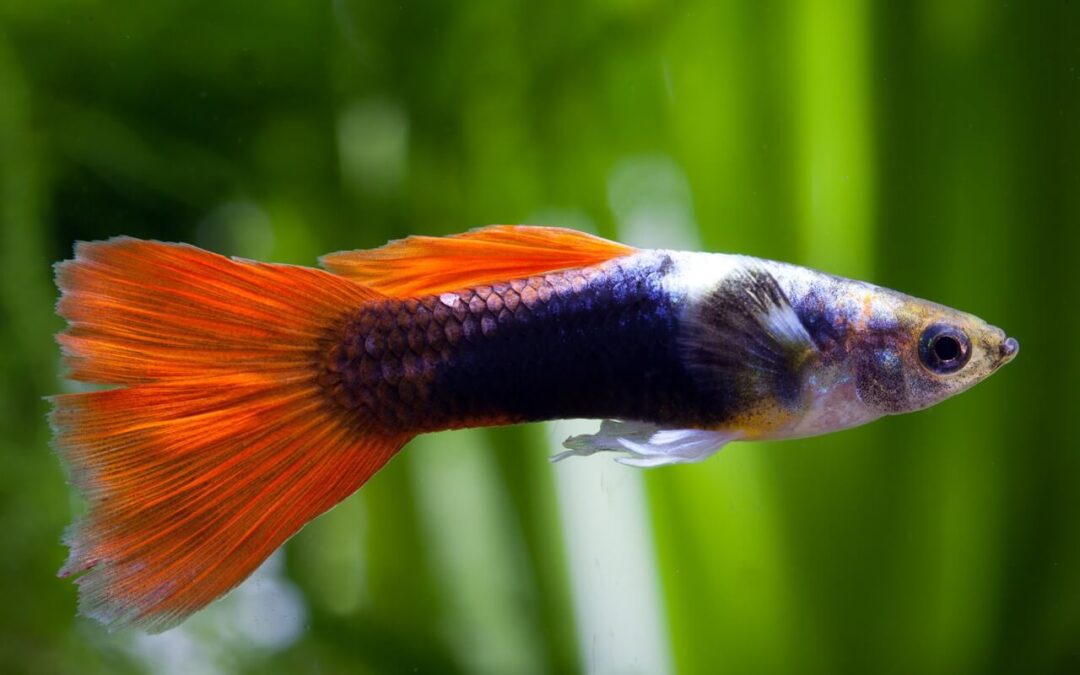
One of the most common questions beginners ask is: what does a guppy fish look like? The answer is surprisingly exciting. Guppies come in countless colors, patterns, and fin shapes, and the differences between males and females are so dramatic that they almost look like two separate species.
In this guide, we’ll take a closer look at the appearance of guppy fish—from their size and body shape to their stunning colors and flowing fins. By the end, you’ll know exactly what makes guppies so visually special and why they’re one of the world’s favorite aquarium fish.
A Quick Look: What Does a Guppy Fish Look Like?
A guppy is a small freshwater fish known for its vibrant colors, graceful fins, and lively swimming style. Native to parts of South America and the Caribbean, guppies have spread across the globe and become one of the most popular fish for home aquariums.
What makes guppies truly stand out is their appearance. Male guppies are famous for their dazzling colors and fancy tails, often glowing in shades of red, blue, green, yellow, and orange. Their bodies and fins may display spots, stripes, or intricate patterns that seem to shimmer under aquarium lights.
Female guppies look very different. They are larger, rounder, and mostly silver or pale gray, with shorter fins and softer coloring. Because of these striking differences, many people are surprised to learn that males and females belong to the same species.
The General Appearance of Guppy Fish
Body Shape
Guppies have slim, streamlined bodies that help them glide easily through the water. Their shape is simple yet elegant, making their colorful fins and patterns stand out even more.
- Head: Small and slightly rounded
- Eyes: Large, alert, and expressive
- Body: Slender, smooth, and gently curved
Their delicate build gives them a graceful, almost floating movement as they swim.
Size
Although guppies are tiny, their size varies depending on gender:
- Male guppies: About 6 to 1.4 inches (1.5–3.5 cm)
- Female guppies: Around 2 to 2.4 inches (3–6 cm)
Females can be nearly twice the size of males, which makes it easy to tell them apart once you know what to look for.
Male Guppies: Bright, Colorful, and Eye-Catching
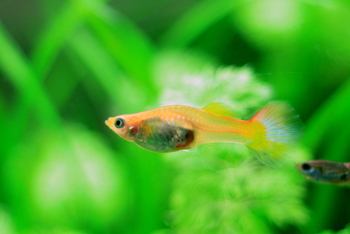
Male guppies are the true showstoppers of the aquarium. Their bold colors and flowing fins instantly draw attention.
Color Explosion
Male guppies display almost every color imaginable, including:
- Red
- Blue
- Green
- Yellow
- Orange
- Purple
- Black
- Metallic and neon shades
These colors may appear as solid blocks, blended gradients, or shimmering reflections that change as the fish moves.
Patterns
On top of their vibrant colors, male guppies often feature stunning patterns, such as:
- Tiny speckles
- Bold spots
- Stripes
- Mosaic and lace designs
- Leopard and snakeskin patterns
No two guppies look exactly alike, which makes them endlessly fascinating to watch.
Fins and Tails
One of the most beautiful parts of a male guppy is its tail fin. These fins are:
- Large
- Flowing
- Fan-shaped
- Decorative
Common tail shapes include:
- Delta tail: Wide, triangular fan
- Veil tail: Long and flowing
- Swordtail: A long extension on the top or bottom
- Lyretail: Forked tail with extended tips
- Round tail: Soft and curved
As they swim, these fins ripple behind them, creating a graceful, floating effect.
Female Guppies: Simple, Elegant, and Graceful
Female guppies may not be as flashy, but their subtle beauty has its own charm.
Color
Most female guppies are:
- Silver
- Light gray
- Pale beige
Some fancy strains may show gentle pastel shades or faint patterns, but overall, females remain more muted compared to males.
Body Shape
Female guppies have:
- Larger bodies
- A rounder shape
- A sturdier appearance
When pregnant, their bellies become noticeably fuller, giving them a plump and rounded look.
Fins
Unlike males, female guppies have:
- Shorter fins
- Simpler tail shapes
- Less decorative features
Their fins are designed more for efficient swimming than visual display.
The Clear Differences Between Male and Female Guppies
The contrast between male and female guppies is one of their most fascinating traits.
| Feature | Male Guppy | Female Guppy |
| Color | Bright, vibrant, colorful | Soft, silver or gray |
| Size | Smaller and slimmer | Larger and rounder |
| Fins | Long, flowing, fancy | Short and simple |
| Patterns | Spots, stripes, mosaics | Minimal or none |
This striking difference makes it easy for even beginners to tell them apart.
Popular Guppy Colors and Strains
Thanks to decades of selective breeding, guppies now come in hundreds of beautiful varieties. Some of the most popular types include:
Fancy Guppies
Bred for vibrant colors and dramatic fins, these are the most common guppies found in pet stores.
Endler Guppies
Smaller and faster than regular guppies, Endlers are famous for their intense neon colors.
Tuxedo Guppies
Dark-colored front halves with brightly colored tails, creating a stylish two-tone effect.
Cobra or Snakeskin Guppies
Intricate, snake-like patterns covering much of their bodies.
Albino Guppies
Pale bodies, red eyes, and soft pastel shades give these fish a delicate and unique appearance.
How Guppies Look as They Grow
Baby Guppies (Fry)
Newborn guppies are tiny and nearly transparent. At first, they appear pale gray and are easy to miss in a tank.
Juveniles
As they grow, young guppies begin to show faint colors. Males slowly develop brighter shades and longer fins.
Adult Guppies
Adult guppies display their full beauty, with rich colors and fully developed fins. They typically reach peak appearance between three and six months of age.
Why Are Male Guppies So Colorful?
In the wild, bright colors help male guppies attract females. Females tend to choose the most colorful and healthy-looking males, which encourages brighter colors over generations.
In home aquariums, selective breeding has taken this even further, creating the incredible range of guppy colors and patterns we see today.
What Does a Healthy Guppy Fish Look Like?
A healthy guppy should have:
- Bright, vibrant coloring
- Smooth, undamaged fins
- Clear, alert eyes
- Active swimming behavior
- A well-shaped body (not bloated or overly thin)
If a guppy looks dull, lethargic, or has clamped fins, it may be stressed or unwell.
FAQs About What a Guppy Fish Looks Like
1. What does a guppy fish look like?
A guppy is a small freshwater fish known for its colorful body, flowing fins, and energetic swimming. Males are bright and flashy, while females are larger and more subtle in appearance.
2. Are male and female guppies easy to tell apart?
Yes. Male guppies are smaller, brightly colored, and have long fins. Females are larger, rounder, and usually silver or gray with short fins.
3. How big do guppy fish grow?
Male guppies grow to about 0.6–1.4 inches, while females reach 1.2–2.4 inches.
4. What colors can guppies be?
Guppies come in nearly every color, including red, blue, green, yellow, orange, purple, black, and metallic shades, often mixed in beautiful patterns.
5. Do all guppies have fancy fins?
No. Only male guppies have long, decorative fins. Female guppies have shorter, simpler fins.
6. Why do guppies look so different from each other?
Selective breeding has created hundreds of guppy strains, each with unique colors, patterns, and fin shapes.
Final Thoughts
So, what does a guppy fish look like? In short, it looks like a tiny piece of living art.
With their brilliant colors, flowing fins, and playful movements, guppies bring life and beauty to any aquarium. Whether you’re a beginner setting up your first tank or an experienced hobbyist, guppies never fail to charm and impress.