
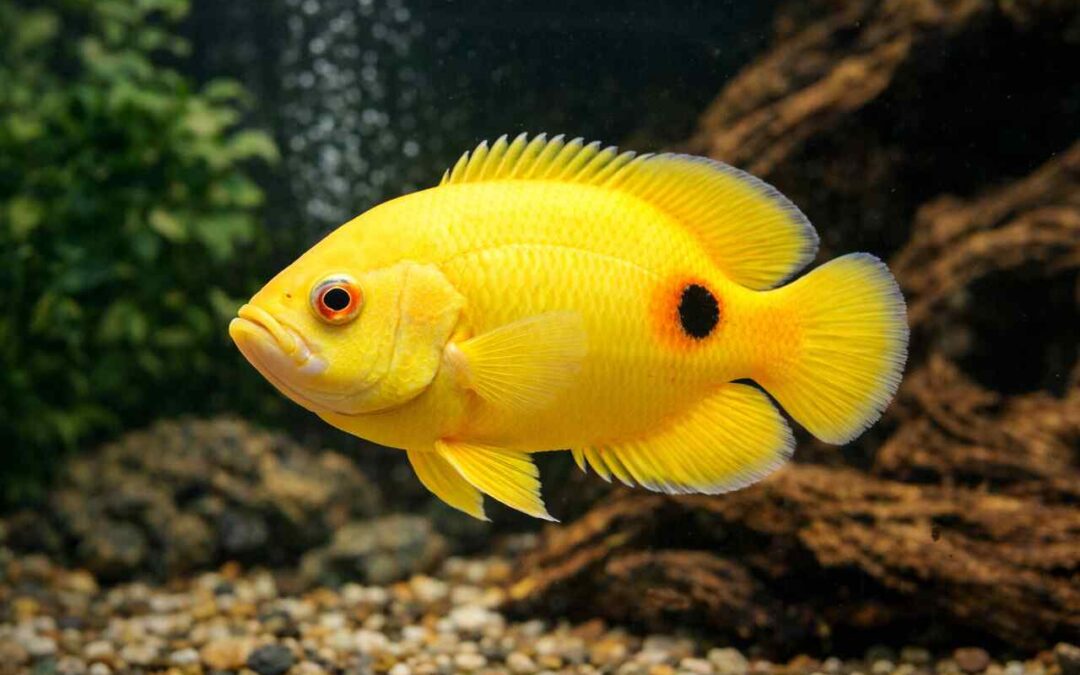
Oscar fish are bold, intelligent, and full of personality—but one question frustrates almost every Oscar owner at some point: how can you tell if an Oscar fish is male or female?
Unlike guppies or angelfish, Oscars are not sexually dimorphic, meaning males and females look almost identical. Even experienced aquarists often guess wrong. Still, there are subtle physical, behavioral, and breeding-related clues that can help you make an educated guess.
In this in-depth guide, we’ll explore everything you need to know about Oscar fish male and female differences, including physical traits, behavior, venting, and the only method that truly confirms their sex.
Why Oscar Fish Are So Hard to Sex
Oscars (Astronotus ocellatus) are among the hardest cichlids to sex accurately. According to long-standing aquarist experience, no single external feature is 100% reliable.
Reasons Oscars are difficult to sex include:
- Both sexes grow to similar sizes
- Color patterns vary by strain, not gender
- Fin shapes overlap heavily
- Behavior differs by personality, not sex
In short, appearance alone can mislead even experts.
Subtle Physical Clues (Less Reliable but Helpful)
These traits can offer hints—but should never be used alone to determine sex.
1. Fin Shape Differences
One commonly discussed clue involves the dorsal and anal fins:
- Male Oscars may have longer, more pointed dorsal and anal fins
- These fins sometimes extend closer to or slightly overlap the tail fin
- Female Oscars often have shorter, rounder fin tips
However, fin damage, age, and genetics can easily blur this difference.
Reliability: ★★☆☆☆
2. Body Shape and Belly Roundness
Another subtle sign appears during maturity or breeding readiness:
- Females may develop a rounder, fuller belly, especially when carrying eggs
- This swollen appearance becomes more obvious shortly before spawning
- Males tend to look more streamlined
Be cautious—overfeeding or internal health issues can mimic this look.
Reliability: ★★☆☆☆
3. Color, Spots, and Head Size
Some aquarists report:
- Males may show brighter coloration, larger heads, or more intense spotting
- Females may appear slightly duller
This varies drastically by strain (Tiger Oscar, Albino Oscar, Red Oscar, etc.), making it highly unreliable.
Reliability: ★☆☆☆☆
Behavioral Clues (Interesting but Not Foolproof)
Behavior can offer hints—but it often leads to incorrect assumptions.
4. Aggression and Territorial Behavior
- Male Oscars are often described as more aggressive or territorial
- They may chase tank mates or dominate feeding
That said, many females are just as aggressive, especially in smaller tanks or stressful conditions.
Reliability: ★★☆☆☆
5. Pairing and Bonding Behavior
Oscars are known for forming strong monogamous pairs, which leads many keepers to assume pairing equals male + female.
But here’s the catch:
- Females can pair with females
- Males can pair with males
- Some Oscars never pair at all
Pairing behavior alone does not guarantee opposite sexes.
Reliability: ★★☆☆☆
The Most Reliable (But Difficult) Method: Venting
Venting is the most accurate non-breeding method, but it comes with risks.
What Is Venting?
Venting involves gently examining the urogenital opening (vent) of the Oscar under good lighting.
How Venting Works
- Female Oscar fish:
- One larger, tube-like opening (ovipositor for egg laying)
- One smaller anal opening
- Male Oscar fish:
- Two small, similar-sized openings
- One for urine/milt, one for waste
Important Warnings
- Venting is stressful and risky, especially for large Oscars
- Improper handling can cause injury or death
- Best done by experienced breeders or professionals
Reliability: ★★★★★ (when done correctly)
When You’ll Know for Sure: Breeding Behavior
The only truly definitive way to identify Oscar fish male and female is through breeding.
Signs of Confirmed Breeding
- The pair cleans a flat surface (rock, slate, tank bottom)
- Female lays hundreds to thousands of eggs in neat rows
- Male follows behind fertilizing the eggs
- Female’s egg-laying tube becomes clearly visible
Once you witness this process, there is no doubt about which fish is male or female.
Male vs Female Oscar Fish: Quick Comparison Table
| Feature | Male Oscar | Female Oscar |
| Fin shape | Longer, pointier (sometimes) | Shorter, rounder |
| Body shape | More streamlined | Fuller belly when gravid |
| Color | Sometimes brighter | Often similar |
| Aggression | Often higher | Can be equally aggressive |
| Venting | Two small holes | One large, one small |
| Breeding proof | Fertilizes eggs | Lays eggs |
Tips for Buying a Male–Female Oscar Pair
If your goal is breeding, consider these tips:
- Buy 6–8 juvenile Oscars and let them pair naturally
- Avoid trusting sellers who claim guaranteed sexes
- Observe bonding behavior over time
- Be patient—Oscars may take 1–2 years to mature
This approach increases your odds without stressing the fish.
Common Myths About Oscar Fish Gender
❌ “The bigger Oscar is always the male”
❌ “Brighter colors mean male”
❌ “Aggression equals male”
❌ “Paired Oscars must be male and female”
All of these are popular but unreliable myths.
Fun Facts and Extra Insights About Male and Female Oscar Fish
One of the most fascinating things about Oscar fish—regardless of gender—is their dog-like intelligence. Oscars can recognize their owners, beg for food, and even sulk when ignored. Interestingly, male and female Oscars show no consistent personality differences, which is another reason sexing them is so difficult. A shy Oscar isn’t necessarily female, and a bold, interactive one isn’t automatically male—it’s just their unique character.
Another fun fact is that Oscar fish are devoted parents, no matter their sex. Once a true male–female pair forms, both parents fiercely guard the eggs and fry. The male often patrols the perimeter of the spawning site, while the female stays closer to the eggs, fanning them to keep oxygen flowing. This shared parenting role is unusual among fish and makes Oscars especially rewarding to observe during breeding.
It’s also worth noting that stress can hide sex-related clues. Poor water quality, cramped tanks, or aggressive tank mates can dull colors, alter behavior, and even prevent breeding altogether. Many aquarists only start noticing clearer male–female differences after upgrading to a larger tank (75 gallons or more) with stable water conditions.
Lastly, patience is key. Many Oscar keepers joke that “your Oscar will tell you its gender when it’s ready”—usually by laying eggs on your favorite decoration. Until then, enjoy the mystery and focus on providing excellent care, because a healthy Oscar is far more impressive than knowing whether it’s male or female.

FAQs About Oscar Fish Male and Female
Can you tell male and female Oscar fish by size?
No. Both males and females can grow equally large, often reaching 12–14 inches in captivity.
Are male Oscar fish more aggressive than females?
Often, but not always. Aggression depends more on personality, tank size, and environment.
Do female Oscar fish have a gravid spot?
Not a true gravid spot like livebearers, but females may show a noticeably rounder belly when carrying eggs.
Is venting safe for Oscar fish?
It can be safe in expert hands, but it’s stressful and risky. Beginners should avoid it.
Can two female Oscars lay eggs together?
Yes. Two females may pair and lay eggs, but the eggs will be infertile.
At what age can you tell Oscar fish gender?
Usually not before 12–18 months, and even then, certainty often requires breeding behavior.
What is the easiest way to confirm Oscar fish sex?
Observing breeding—female laying eggs and male fertilizing them—is the only guaranteed method.
Final Thoughts
Determining Oscar fish male and female differences is one of the most challenging tasks in the aquarium hobby. While subtle physical and behavioral clues can help guide your guess, none are fully reliable on their own.
Venting and breeding observation remain the most accurate methods, with breeding being the only foolproof confirmation. Until then, patience—and a bit of mystery—comes with keeping these intelligent, charismatic fish.
If you’re raising Oscars, remember: their personality matters far more than their gender.