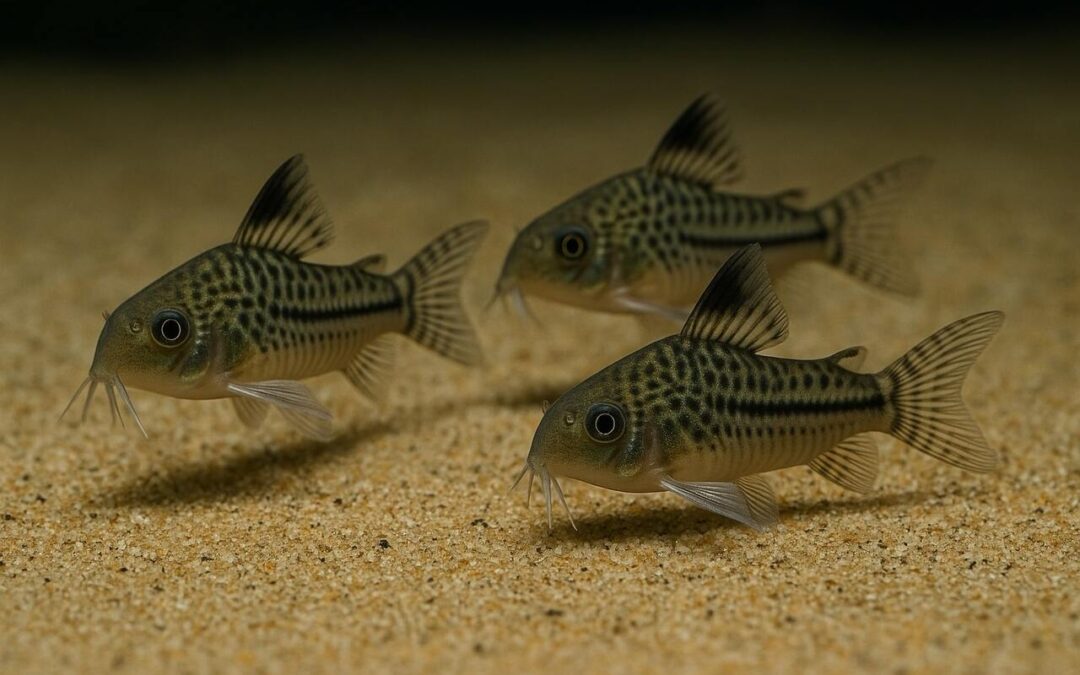
Corydoras, often called cory cats, are some of the most lovable and hardworking fish in the aquarium hobby. With their constant foraging, playful schooling behavior, and gentle nature, they quickly become favorites in community tanks. However, one of the most common mistakes aquarists make is assuming Corydoras can survive on leftovers alone. In reality, choosing the best food for Corydoras is essential for their health, coloration, and lifespan.
This guide breaks down exactly what Corydoras should eat, why sinking foods matter, and how to build a balanced diet that mimics what they eat in the wild.
What Do Corydoras Eat in Nature?
In the wild, Corydoras are bottom feeders that sift through sand and soft substrates in search of food. Their natural diet consists mainly of:
- Insect larvae
- Small worms
- Crustaceans
- Organic matter
This means Corydoras are not algae eaters, even though they are often mistaken for them. They are omnivores with a strong preference for meaty, protein-rich foods. Any feeding plan should reflect this natural behavior.
Best Staple Foods for Corydoras (High-Protein & Sinking)
According to experienced aquarists, the best food for Corydoras is a varied diet of high-protein, sinking foods. Since they feed at the bottom, food must reach the substrate before other fish eat it.
1. Sinking Pellets and Wafers
These should form the foundation of your Corydoras’ diet. Look for pellets or wafers made specifically for bottom feeders, with insects, shrimp, or fish meal listed as the first ingredient.
Good options include:
- Fluval Bug Bites Bottom Feeder Formula
- Hikari Carnivore Pellets
- Hikari Micro Pellets (for smaller species)
These foods sink quickly, soften easily, and provide the protein Corydoras need for growth and energy.
2. Frozen and Live Foods
Frozen and live foods are excellent for variety and mimic what Corydoras eat in nature. They are especially helpful for conditioning breeding adults and supporting young fish.
Top choices include:
- Bloodworms
- Brine shrimp (especially good for juveniles)
- Mysis shrimp
- Live blackworms (if available and from a safe source)
Feed frozen foods 2–3 times per week rather than daily to avoid overfeeding.
3. Gel Foods
Gel foods are becoming increasingly popular among Corydoras keepers. Products like Repashy gel foods sink well and can be customized with added nutrients.
- Repashy “Morning Wood”
- Repashy “Soilent Green” (used occasionally, not as a main food)
These gels stay intact at the bottom, allowing Corydoras to graze naturally without fouling the water.
Treats and Supplements for Corydoras
While protein is key, Corydoras benefit from some variety in their diet.
Algae Wafers (In Moderation)
Algae wafers are useful for variety, but they should not be the main food. Corydoras are not true algae eaters, so choose protein-rich algae wafers rather than purely plant-based ones.
- Hikari Mini Algae Wafers are a popular choice
Offer these once or twice a week alongside meaty foods.
Fresh Vegetables
Occasional fresh veggies can add fiber and micronutrients.
Safe options include:
- Blanched zucchini
- Blanched cucumber
- Blanched kale or spinach
Remove uneaten vegetables after 12–24 hours to keep water clean.
Feeding Tips for Corydoras
Feeding Corydoras properly isn’t just about what you feed, but how you feed them.
Sinking Is Key
Always use sinking foods so they reach the bottom where Corydoras naturally forage.
Don’t Rely on Leftovers
Corydoras should be fed directly. Leftovers from mid-water fish are rarely enough and often nutritionally incomplete.
Rotate the Diet
Rotate between pellets, frozen foods, gel foods, and occasional veggies. This prevents nutritional gaps and keeps fish active and interested.
Check Ingredients
Prioritize foods with insects, worms, shrimp, or fish meal. Avoid products filled with soy, wheat, or excessive grains.
Feed at the Right Time
Feeding after lights dim or just before lights out can help ensure Corydoras get their share, especially in busy community tanks.
How Often Should You Feed Corydoras?
- Once daily is sufficient for adult Corydoras
- Twice daily in small portions for juveniles or breeding groups
Only feed what they can consume within a few hours at the bottom.
FAQs About the Best Food for Corydoras
What is the best food for Corydoras?
The best food for Corydoras is a varied diet of high-protein, sinking foods such as insect-based pellets, bloodworms, mysis shrimp, and occasional algae wafers or vegetables.
Can Corydoras live on leftover fish food?
No. Corydoras should not rely on leftovers alone. They need targeted feeding with sinking foods to meet their nutritional needs.
Are algae wafers enough for Corydoras?
Algae wafers are not enough on their own. Corydoras are not algae eaters and require protein-rich foods as their main diet.
How often should I feed Corydoras?
Most Corydoras do well with once-daily feeding. Juveniles may benefit from smaller meals twice a day.
Do Corydoras need live food?
Live food is not required, but it is beneficial. Frozen foods provide similar nutrition and are more convenient for most aquarists.
Final Thoughts
Providing the best food for Corydoras means understanding their natural behavior and nutritional needs. These bottom-dwelling fish thrive on high-protein, sinking foods, supplemented with frozen treats and occasional vegetables. By rotating foods, checking ingredients, and feeding them directly, you’ll ensure your Corydoras stay active, healthy, and long-lived.
A well-fed Corydoras isn’t just healthier—it’s more confident, more social, and far more enjoyable to watch in your aquarium.