When researching Arowana vs Arapaima, many fishkeepers notice their prehistoric appearance, massive size potential, and carnivorous diets. Although both fish belong to the order Osteoglossiformes, they differ greatly in size, temperament, habitat, and aquarium requirements. Understanding these differences is crucial for anyone considering keeping one of these impressive fish species.
Experts highlight that Arapaimas are significantly larger and belong to a separate genus, while Arowanas are smaller and have distinctive barbels. Arapaimas come exclusively from the Amazon River basin, whereas Arowanas have a wider distribution across South America, Africa, Asia, and Australia.
This guide breaks down everything you need to know so you can confidently compare these two world-famous fish.
Arowana vs. Arapaima: Quick Comparison Table
| Feature | Arapaima | Arowana |
| Size | Up to 8 feet | Up to 3–4 feet |
| Body Features | Thick body, no barbels | Slim body, mouth barbels |
| Origin | Amazon River basin | Africa, Asia, South America, Australia |
| Temperament | Generally tolerant | Often aggressive |
| Parental Care | Both parents guard nest | Male mouthbroods eggs |
| Minimum Tank Size | 1000+ gallons | 250+ gallons |
Origins and Habitat Differences
Arapaima (Arapaima gigas and related species)
The Arapaima is native to the Amazon River basin, thriving in slow-moving, oxygen-poor waters. Because of this, they surface frequently to breathe air using their modified swim bladder. Their natural environment includes floodplains, blackwater rivers, and swampy wetlands.
Arowana (Family: Osteoglossidae)
Arowanas have a far wider natural range and can be found in:
- Asia – Asian Arowana
- South America – Silver and Black Arowana
- Africa – African Arowana
- Australia – Jardini and Leichardti Arowanas
This wide distribution has produced various species with unique colors, behaviors, and sizes.
Size Comparison: Giant Arapaima vs. Large Arowana
One of the biggest differences in the Arowana vs. Arapaima debate is their adult size. According to available data summaries:
- Arapaima can reach up to 8 feet, making them one of the largest freshwater fish on Earth.
- Arowanas grow up to 3–4 feet, depending on the species.
This massive size gap affects everything—from housing needs to long-term care. While advanced aquarists sometimes keep Arowanas, Arapaimas are suited only for public aquariums, large facilities, or massive private ponds.
Body Shape and Physical Features
Arapaima Appearance
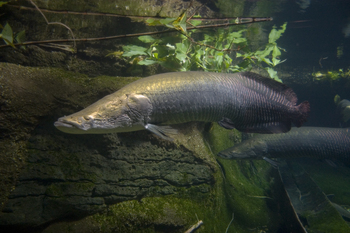
Arapaimas have:
- A thick, bulky body
- A large head with an upturned mouth
- No barbels
- Large, armor-like scales with green or red tones
Their appearance reflects their slow but powerful hunting style.
Arowana Appearance
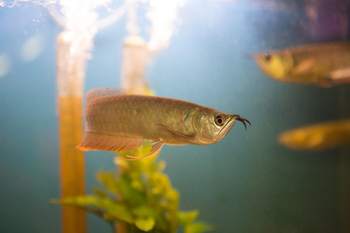
Arowanas are known for:
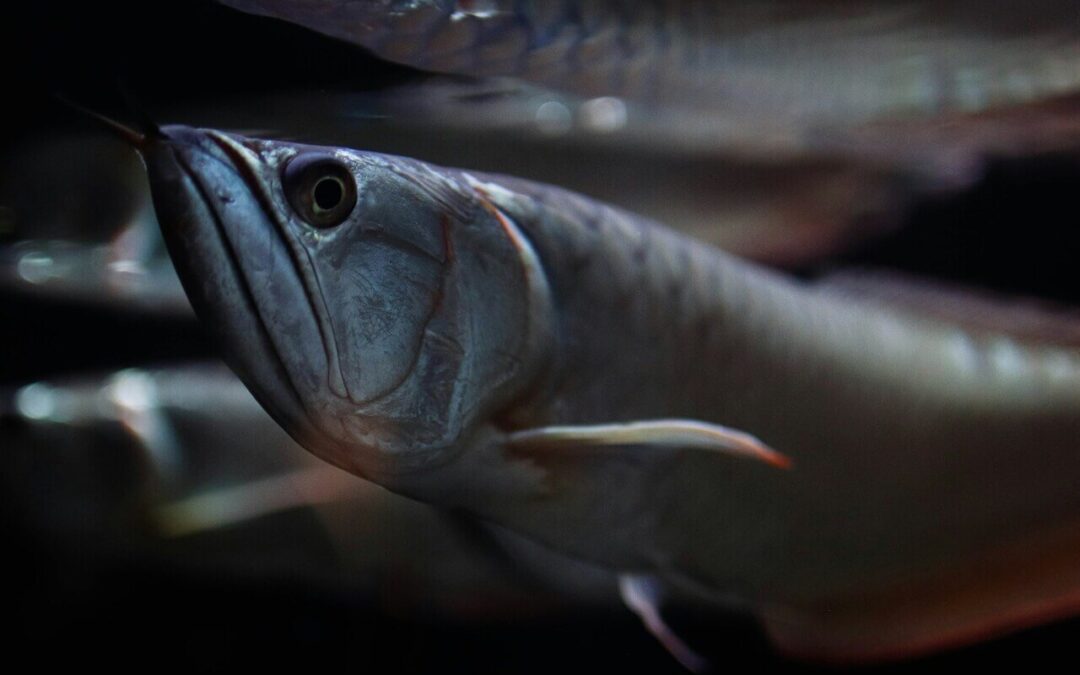
- Their slim, elongated bodies
- Two distinct barbels at the mouth
- Large, shiny scales
- A dragon-like profile popular in aquarium culture
These features make the Arowana one of the most visually striking freshwater fish in the world.
Temperament: Which Fish Is More Aggressive?
Experts note that Arapaimas tend to be less aggressive than Arowanas, which surprises many people given their gigantic size.
Arapaima Behavior
- Generally calm
- Can be territorial when confined
- Peaceful unless threatened
- Powerful due to sheer size
Arowana Behavior
- Highly territorial
- Known for chasing or biting tankmates
- Prone to stress-related jumping
- Very predatory and reactive to movement
Because of their temperament, Arowanas need careful tankmate selection and secure aquarium lids.
Reproduction and Parental Care
Arapaima Reproduction
Arapaimas form nests in shallow water, and both parents provide protection. They guard the eggs and young fry, keeping them safe from predators.
Arowana Reproduction
Most Arowana species use mouthbrooding, where the male carries eggs in his mouth until they hatch. This form of parental care is admired and has symbolic meaning in many Asian cultures.
Aquarium Requirements: Can You Keep These Fish at Home?
Arapaima Tank Requirements
Because of their size, Arapaimas require:
- 1000+ gallon tanks or large ponds
- Extremely strong filtration
- Ample horizontal swimming space
- Surface access to breathe air
Arapaimas are not practical for home aquariums.
Arowana Tank Requirements
Arowanas can be kept by experienced aquarists if provided with:
- 250+ gallon tank (longer is better)
- Powerful filtration
- A tightly secured lid
- Minimal decoration to avoid injury
- Proper surface feeding space
Though still challenging, Arowanas are far more manageable than Arapaimas.
Diet and Feeding Style
Arapaima Diet
Arapaimas are carnivores that feed on:
- Fish
- Crustaceans
- Insects
- Occasional mammals or birds
Their suction-feeding strike is extremely powerful.
Arowana Diet
Arowanas prefer surface foods like:
- Insects
- Small fish
- Frogs
- Mealworms
- Floating pellets
They are agile surface predators known for their impressive leaps.
Which Fish Is Better for Aquarists?
For nearly all hobbyists, Arowanas are the realistic choice. They still require a large tank and advanced care, but they can be kept successfully with proper planning.
Arapaimas, due to their 8-foot potential, belong in:
- Public aquariums
- Research facilities
- Massive ponds
Both fish are breathtaking, but they suit very different environments.
Frequently Asked Questions (FAQs)
1. Which is bigger, Arowana or Arapaima?
Arapaima is much larger, reaching up to 8 feet, while Arowanas grow 3–4 feet.
2. Are Arowanas more aggressive than Arapaimas?
Yes. Arowanas are more territorial and reactive. Arapaimas are typically calm unless threatened.
3. Do Arowanas have whiskers?
Yes. Arowanas have mouth barbels, while Arapaimas do not.
4. Can I keep an Arapaima in a home aquarium?
No. Arapaimas require thousands of gallons—far beyond home tank capacity.
5. Are both species predatory?
Yes, but Arowanas are more agile surface hunters, while Arapaimas rely on suction feeding.
6. Which fish is more suitable for beginners?
Neither. But Arowanas are far more attainable for advanced aquarium keepers.